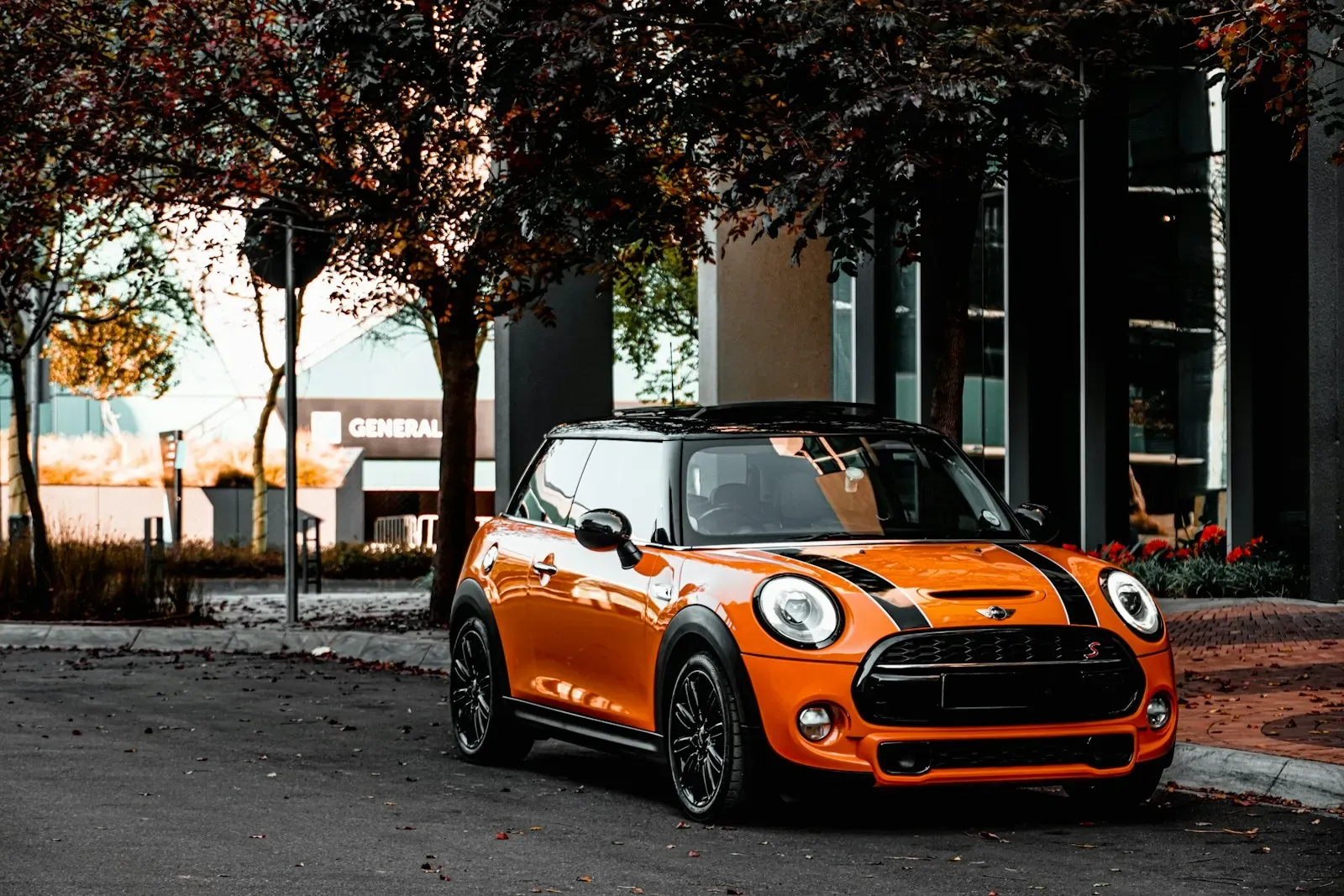
MINI vehicles have carved out a unique niche on Ottawa roads. Their go-kart handling, distinctive styling, and surprisingly capable all-wheel-drive systems make them popular choices for navigating the capital's streets year-round. At Franco Garage, we have been servicing MINI vehicles at our 70 Beech Street shop since the modern BMW-era MINI launched in 2002, and our roots in European vehicle repair go all the way back to 1981. Whether you drive a Cooper hardtop, a Countryman crossover, or a Clubman wagon, our technicians understand the engineering behind these cars and the specific problems they develop—especially in Ottawa's demanding climate.
The MINI Lineup We Service
MINI Cooper and Cooper S
The Cooper hardtop and convertible are the core of the MINI range. The turbocharged 1.5-litre three-cylinder in the base Cooper and the 2.0-litre turbocharged four-cylinder in the Cooper S are responsive, fuel-efficient engines that reward spirited driving. They are also compact, tightly packaged powerplants that require a technician who understands BMW-derived engineering. We service all generations of the modern Cooper, from the R50 and R53 first-generation cars through the R56 second generation to the current F56 platform.
MINI Countryman
The Countryman is the most popular MINI in Ottawa for good reason. Its available ALL4 all-wheel-drive system, raised ride height, and additional cargo space make it a practical year-round vehicle for families and commuters who still want the MINI driving experience. The Countryman shares its platform and many mechanical components with the BMW X1, meaning it benefits from our extensive BMW service expertise as well.
MINI Clubman
The Clubman offers a longer wheelbase and the distinctive split rear doors that make it one of the most recognizable vehicles on the road. Available with ALL4 all-wheel drive and the full range of Cooper, Cooper S, and John Cooper Works powertrains, the Clubman is a versatile choice for Ottawa drivers who need more cargo flexibility without moving to a crossover.
Common MINI Problems We Repair
Timing Chain Tensioner Failures
The timing chain tensioner is the single most critical known issue on the second-generation MINI models equipped with the N14 and N18 engines (2007–2013 Cooper S and JCW models). The original tensioner design was prone to premature failure, which allows the timing chain to develop slack. A loose timing chain can skip teeth on the sprockets, causing catastrophic valve-to-piston contact and destroying the engine. Symptoms include a rattling noise from the front of the engine on cold start, rough idle, and eventually a check engine light with timing correlation codes. If your MINI has the N14 engine and more than 80,000 kilometres, the timing chain tensioner should be inspected annually and replaced preventively if it has not been updated to the revised design. We stock the updated tensioner and perform this repair regularly at Franco Garage.
Turbo Oil Leaks and Turbocharger Issues
Every modern MINI Cooper S and JCW is turbocharged, and the turbocharger relies on a constant supply of clean engine oil for lubrication and cooling. Over time, the turbo oil feed and return lines develop leaks at their connections, allowing oil to seep onto the exhaust manifold and create visible smoke and a burning oil smell. The turbo itself can also develop shaft seal wear, particularly if oil change intervals have been stretched. We inspect the turbo system as part of every MINI service and can replace oil lines, gaskets, or the complete turbocharger assembly when needed. Using the correct oil specification—typically BMW LL-01—is essential for turbo longevity, and we always use LIQUI MOLY or Castrol oils that meet or exceed this standard.
Electric Power Steering Pump Failures
MINI vehicles use an electric power steering (EPS) system rather than a traditional hydraulic pump. The EPS pump is mounted low on the engine subframe and is vulnerable to moisture intrusion, particularly on Ottawa roads where standing water, slush, and road spray are constant threats from October through April. When the EPS pump fails, you lose power steering assist entirely, making the car difficult and potentially dangerous to drive. Warning signs include intermittent heavy steering, a whining noise from under the hood, and a power steering warning light on the dashboard. Replacement of the EPS pump is a straightforward repair at our shop, and we always test the replacement unit thoroughly before returning the vehicle.
Carbon Buildup on Direct-Injection Engines
All modern MINI engines use direct fuel injection, which sprays fuel directly into the combustion chamber rather than across the intake valves. While this is efficient for combustion, it means the intake valves are never washed by fuel, allowing carbon deposits to accumulate on the valve stems and ports over time. Carbon buildup restricts airflow, causes rough idle, misfires, hesitation under acceleration, and reduced fuel economy. By 80,000 to 100,000 kilometres, many MINI engines have significant carbon accumulation that affects drivability. We perform walnut-shell blasting to remove carbon deposits from the intake valves, restoring airflow and engine performance to factory levels. This is a maintenance service we recommend for any direct-injection MINI once it reaches the 80,000-kilometre mark.
Coolant System Leaks
MINI cooling systems are a consistent source of problems across all generations. The thermostat housing, water pump, expansion tank, and associated hoses are all made from plastic or composite materials that become brittle over time, especially with the extreme temperature cycling that Ottawa's climate imposes. The thermostat housing is the most common failure point—it develops hairline cracks that allow coolant to seep out slowly, often going unnoticed until the coolant level drops enough to trigger an overheating warning. The electric water pump is another known failure point, and when it fails, there is no coolant circulation at all. We inspect the entire cooling system during every MINI service and recommend preventive replacement of the thermostat housing and water pump at 100,000 kilometres or at the first sign of seepage.
Clutch Actuator Issues on Automated Manual Transmissions
Some MINI models were equipped with an automated manual transmission (the Getrag six-speed unit), which uses a hydraulic clutch actuator to engage and disengage the clutch automatically. This actuator is prone to failure, causing harsh or delayed shifts, inability to select gears, and transmission warning lights. The clutch actuator is an expensive component, and its failure can leave you stranded. If you own a MINI with the automated manual transmission, we recommend having the clutch actuator inspected at every major service interval and replacing the hydraulic fluid that operates it according to schedule.
Ottawa-Specific MINI Maintenance
Cold-Weather Starting and Battery Care
MINI vehicles use small, high-output batteries that are worked hard by the car's extensive electronics, start-stop systems, and heated accessories. Ottawa winters, where temperatures regularly drop below minus twenty Celsius, put enormous strain on these batteries. A battery that tests fine in September can fail completely by January. We recommend battery testing every fall and replacement every four to five years regardless of apparent condition. Starting your MINI in extreme cold with a marginal battery also stresses the starter motor and alternator, leading to cascading failures.
Road Salt and Underbody Corrosion
Ottawa uses an enormous amount of road salt between November and April, and MINI vehicles—being low to the ground with compact underbodies—are particularly exposed to salt spray. The exhaust system, brake lines, subframe mounting points, and suspension components are all vulnerable. We recommend annual underbody rust-proofing treatment before the salt season begins and regular undercarriage washing throughout winter. Our technicians inspect for corrosion at every service appointment and can address rust issues before they compromise safety-critical components.
ALL4 System Winter Maintenance
The MINI ALL4 all-wheel-drive system is an excellent asset on Ottawa's snowy and icy roads when it is properly maintained. The system uses an electromagnetic centre differential that distributes torque between the front and rear axles. The differential fluid must be changed at the manufacturer-specified intervals to ensure the electromagnetic clutch pack operates correctly. Running on old, degraded fluid reduces the system's ability to transfer torque to the rear wheels when you need it most—exactly the worst time to discover your AWD is not functioning properly.
Winter Tire Recommendations
MINI vehicles respond exceptionally well to dedicated winter tires. The short wheelbase and low centre of gravity that make them fun to drive in summer can make them nervous on snow and ice with all-season tires. We strongly recommend a dedicated set of winter tires on steel or alloy wheels, mounted by early November for Ottawa conditions. The transformation in winter grip and confidence is dramatic, and proper winter tires also reduce the load on the ALL4 system in Countryman and Clubman models.
Why Ottawa MINI Owners Choose Franco Garage
Franco Garage has been servicing European vehicles in Ottawa since 1981. Our technicians are trained on BMW and MINI platforms and have access to factory-level diagnostic tools that can communicate with every module in your MINI. We use genuine and OEM-equivalent parts, and our oil and fluid specifications always meet or exceed manufacturer requirements. We understand that MINI owners are enthusiastic about their cars, and we share that enthusiasm—we want your MINI to drive the way it was designed to, every day, in every season.