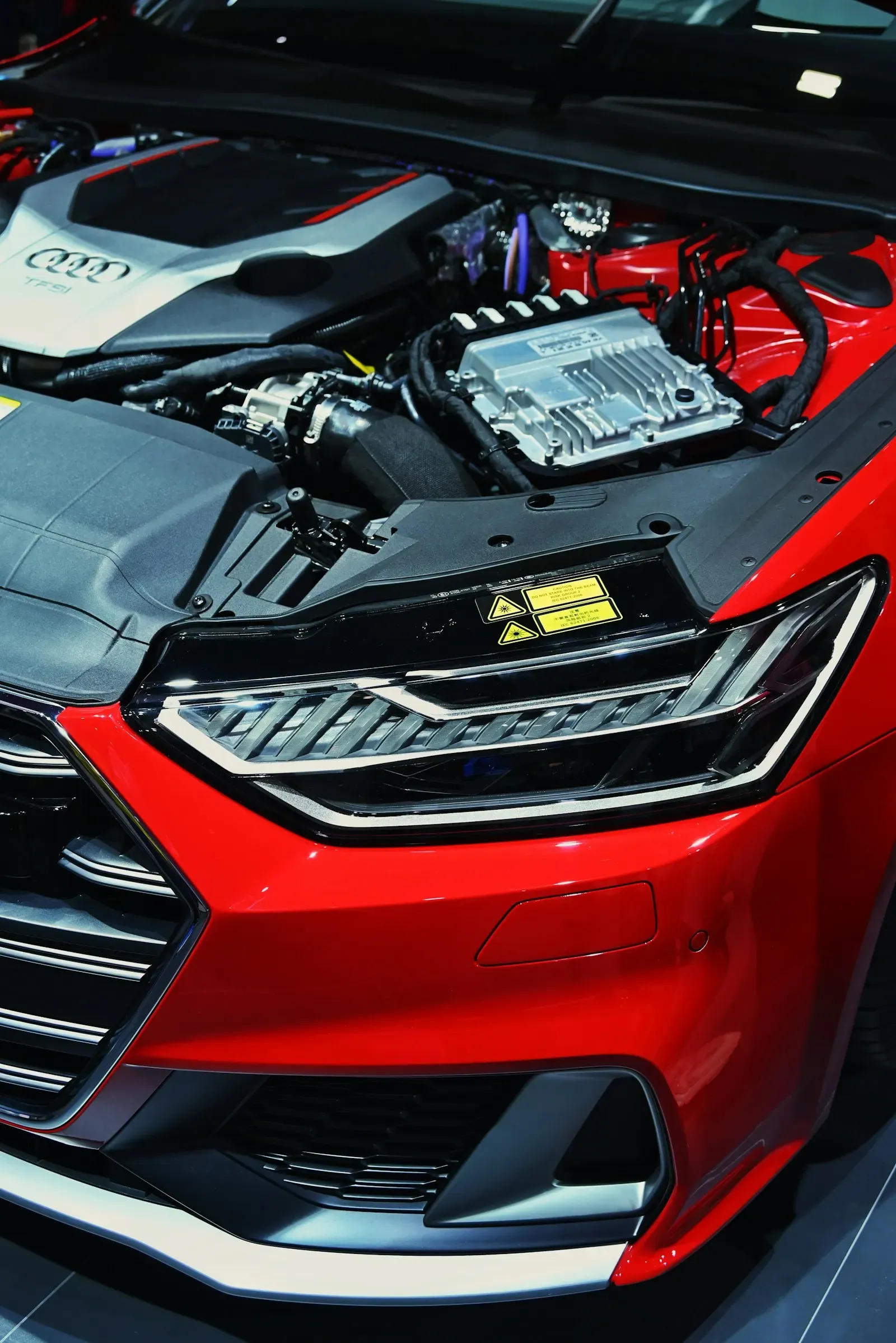
Lighting is the most avoidable category of safety inspection failure there is. A bulb costs a few dollars and takes minutes to change — and a burnt one fails the whole inspection just as surely as a rotted frame rail does.
Section 6 of Ontario's inspection standard covers lamps, and it is one of the longest sections in the document. Here is what it requires.
Every required lamp must work
The general rule first. A lamp fails if it:
- Fails to illuminate fully and correctly in response to its switch or control
- Fails to turn off in response to the switch or control
- Has a lens, reflector or assembly part that is missing, broken, cracked or inoperative
- Has an insecure mounting, or hardware not correctly installed
- Is not clearly visible or is covered in any manner
- Does not meet the colour, location or orientation requirements of CMVSS 108
- Has been altered from OEM condition so as to reduce or significantly increase light intensity, lens surface area, or the colour of light emitted
There is also a rule that catches wiring problems: a lamp fails if the operation of a lighting circuit interferes with the operation of any other circuit — the classic symptom being brake lights that dim when the turn signal flashes.
Which lamps are required
For a passenger car or light truck under 2.05 m wide:
- Headlamps — high and low beam
- Tail lamps — 2, red
- Stop lamps — 2, red
- Centre high-mount stop lamp — 1, red (required on passenger cars built on or after January 1, 1987)
- Licence plate lamp — 1, white
- Parking lamps — 2, amber or white
- Turn signal lamps — 2 amber front, 2 red or amber rear
- Hazard warning lamps — may share the turn signal lamps
- Side marker lamps — 2 amber front, 2 red rear (required on vehicles manufactured January 1, 1971 or later)
- Back-up lamp — 1, white (required on vehicles manufactured after January 1, 1971)
- Daytime running lamps (required on vehicles manufactured after December 1, 1989)
- Reflex reflectors — 4 red, 2 amber
Instrument panel indicators for high beam, turn signal and hazard must all work as well.
LED and HID rules
This is where modified vehicles get caught.
LED lamps other than headlamps: the vehicle fails if 25% or more of the LEDs in any one lamp assembly are inoperative. A tail light with a few dead diodes may pass; one with a quarter of the array out does not.
LED headlamps: stricter — a single non-functional diode fails.
HID: the vehicle fails if an HID bulb is installed in a housing designed for an incandescent headlamp. This is the common aftermarket "HID kit" and it is an outright failure. An HID assembly also fails if it does not display HG, DC, DR or DCR codes.
The reasoning is straightforward: a housing designed around a filament bulb has a reflector geometry that does not control an HID or LED source. The result is a beam that scatters into oncoming traffic — which the standard separately fails as excessive light scatter.
Hazed and clouded headlights
Headlamps fail if the lenses are crazed, clouded, fogged or damaged so as to materially impair the beam pattern or produce excessive light scatter to oncoming drivers.
This is a genuine failure, not a cosmetic note. Ottawa's UV and winter grit haze polycarbonate lenses badly over ten years, and a heavily hazed lens can cut effective light output dramatically while throwing glare where it should not go.
If you cannot see the reflector clearly through the lens, it is worth addressing. Restoration kits work reasonably on moderate hazing; badly degraded lenses need replacement.
Headlamp aim
Aim is checked against the manufacturer's specification, or where none is available, using an aiming screen at 7.6 m:
For a low beam lens marked type 2:
- The left edge of the beam must be within 100 mm left or right of straight ahead
- The top edge must not be above the horizontal line, and no more than 100 mm below it
For a high beam lens marked type 1, and any unmarked lens:
- The centre of the beam must not be above, and no more than 100 mm below, the horizontal line
- The centre must be no more than 100 mm left or right of straight ahead
Aim is checked with the vehicle unloaded. Missing or insecurely mounted headlamp aim adjusters are themselves a failure.
Other lamp-specific rules
Headlamp switch or beam selector fails if broken, missing, inoperative, or not meeting OEM standard. A high beam indicator lamp that is inoperative fails.
Turn signals fail if the control is broken, missing or inoperative, if it fails to hold the selected position, or — on a vehicle under 2.05 m wide — if it fails to cancel automatically when the steering returns to centre.
Back-up lamps fail if missing, not white, not located at the rear, if they fail to illuminate with the engine running and the transmission in reverse, or if they illuminate in any gear position other than reverse.
Licence plate lamp fails if not white, if it fails to illuminate the plate when operated by the headlamp control, or if the lamp is not shielded from projecting light rearward.
Daytime running lamps must be on the front, white, amber or yellow, and operate continually when the engine is running, the parking brake is released, and the master lighting switch is not in the "On" position. They may switch off while the transmission is in park or neutral, while the parking brake is applied, or after starting but before the vehicle first moves.
Auxiliary lamps — fog lamps, auxiliary headlamps — are not required, but if fitted and functional they must be inspected. Auxiliary headlamps must be white; fog lamps white, yellow or amber; anything on the rear must be red. An auxiliary low-beam lens must be marked with code "Z" and an auxiliary high-beam lens with code "Y".
Reflex reflectors
Required reflectors fail if broken, missing, obscured or not clearly visible, or if not labelled to show compliance with CMVSS, DOT or SAE standards. A lamp's lens may also serve as a reflex reflector.
The five-minute check that saves an inspection
Genuinely: grab someone, park facing a wall or a window at dusk, and work through it.
Headlights low. Headlights high. Check the blue indicator on the dash. Parking lights. Left signal, right signal — front and rear, and confirm the dash indicator blinks. Hazards. Brake pedal, including the third brake light. Reverse. Licence plate light. Then walk around and look at the lenses.
Five minutes, and it eliminates the most common failure category in the entire inspection.
Frequently asked questions
Will one burnt-out bulb fail my safety inspection? Yes. Every required lamp must illuminate fully and correctly. A single burnt bulb — including the licence plate lamp — fails the inspection.
Are aftermarket LED bulbs legal in Ontario? An LED bulb installed in a housing designed for an incandescent bulb creates a beam pattern the housing cannot control, and the standard fails lamps altered from OEM condition in ways that change light intensity or scatter. HID bulbs in incandescent housings fail explicitly. Factory LED and HID systems are fine; conversion kits generally are not.
Do hazy headlights fail a safety inspection? They fail if the lenses are crazed, clouded, fogged or damaged enough to materially impair the beam pattern or produce excessive light scatter to oncoming drivers. Light hazing usually passes; heavy yellowing that obscures the reflector generally does not.
Are fog lights required? No. Auxiliary lamps including fog lamps are not required — but if they are fitted and functional they are inspected, and must meet the colour and aim requirements for their type.
Does a burnt-out third brake light fail? Yes, on any passenger car built on or after January 1, 1987, and on vehicles under 2.05 m wide with a GVWR under 4,536 kg built on or after January 10, 1997. The centre high-mount stop lamp is a required lamp on those vehicles.
Not sure your lights are right? We will check every one against the standard as part of a Safety Standards Certificate inspection. Call (613) 789-2128. Franco Garage, 70 Beech Street, Ottawa.