
Safety Standards Certificate Ottawa
Buying or selling a used vehicle? Moving to Ontario? Franco Garage is a licensed Vehicle Inspection Centre in Ottawa — formerly known as a Motor Vehicle Inspection Station. Our licensed technicians inspect your vehicle against the province's written standard in about 1 hour, and if it passes you leave with your certificate the same visit.
When Do You Need a Safety Standards Certificate?
A Safety Standards Certificate — most people just call it "a safety" — is required by the Ontario Ministry of Transportation at specific moments in a vehicle's life. If any of these apply to you, you need one, and only a licensed inspection centre can issue it.
Buying or Selling a Used Vehicle
Transferring a used vehicle to a new owner — anyone other than your spouse — requires a Safety Standards Certificate before it can be plated and registered.
Registering a Vehicle From Another Province
Moving to Ottawa from Quebec, Alberta, B.C. or anywhere outside Ontario? A vehicle registered in another jurisdiction needs a safety certificate before Ontario will register it.
Changing a Vehicle From Unfit to Fit
A vehicle registered as "unfit" cannot legally be driven. Passing an inspection at a licensed centre is how its status changes to "fit" and it returns to the road.
Registering a Rebuilt Vehicle
Vehicles carrying a rebuilt brand need a structural inspection at a centre licensed for that work, plus a Safety Standards Certificate, before they can be registered.
Insurance and Rideshare Requirements
Some insurers ask for a current safety certificate before covering an older or newly purchased vehicle, and rideshare platforms may require proof of a recent safety inspection.
Safety Inspection — from $174.95
The complete inspection by a licensed technician, wheels off, brakes measured, road test included — and the certificate itself when your vehicle passes.
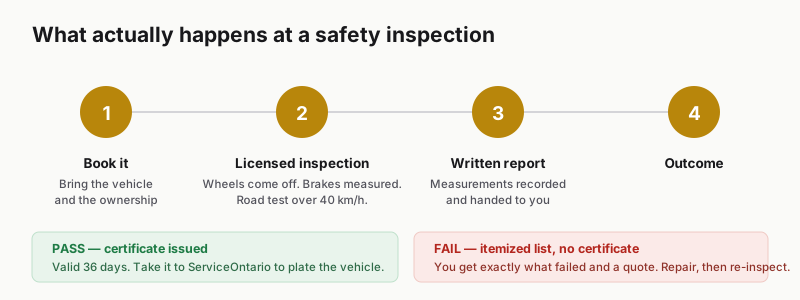
How Getting Your Certificate Works
Four steps, one visit, no surprises about what it costs or what happens if something fails.
DriveON replaced MVIS — here's what that means for you
Ontario's old paper-based Motor Vehicle Inspection Station program ended on March 31, 2025. It was replaced by DriveON, the province's digital inspection program. Shops licensed under it are now called Vehicle Inspection Centres, though most people — us included — still say "MVIS" out of habit.
The standard your vehicle is measured against did not get easier. What changed is how the results are recorded: inspections are submitted digitally to the province, and your certificate is issued digitally rather than as a paper form that can be forged or lost.
- Inspection results are submitted electronically to the Ministry of Transportation
- Your certificate is issued digitally and can be emailed to you
- A buyer can verify a certificate is genuine — much harder to fake
- Measurements are recorded, not just ticked off on a clipboard

What's Actually Inspected: The Eleven Sections
Ontario's Passenger/Light-Duty Vehicle Inspection Standard is organized into eleven sections, and every one applies to your vehicle. Within them, hundreds of individual items are checked against written pass/fail criteria — not a technician's opinion.
Powertrain
Exhaust, fuel system, drive shafts, CV joints, engine and transmission mounts, drive belts, EV and hybrid drivetrains.
Suspension
Ride height, control arms, bushings, springs, shocks and struts, air suspension.
Brake Systems
Lines, master cylinder, boost system, drum and disc components, parking brake, ABS. Measured, not eyeballed.
Steering
Rack or box, tie rods, ball joints, pitman arm, column, power steering, free play against a published table.
Instruments & Auxiliary Equipment
Horn, speedometer, odometer, wipers and washers, heater and windshield defroster.
Lamps
Headlamps and aim, tail, stop, turn, hazard, side marker, back-up, licence plate and daytime running lamps.
Electrical System
Wiring securement and insulation, circuit protection, battery posts, mount and hold-down.
Body
Hood and latches, structural assemblies, doors, bumpers, windshield, side and rear glass, mirrors, seats, seat belts and airbags.
Tire and Wheel
Tread depth, tread and sidewall condition, tire matching, inflation, hubs, bearings, rims and wheel fasteners.
Coupling Devices
Hitch assembly, ball and pintle wear, safety chain anchor points — inspected when fitted.
Road Test
An on-road evaluation. Details below — it catches what a stationary inspection cannot.
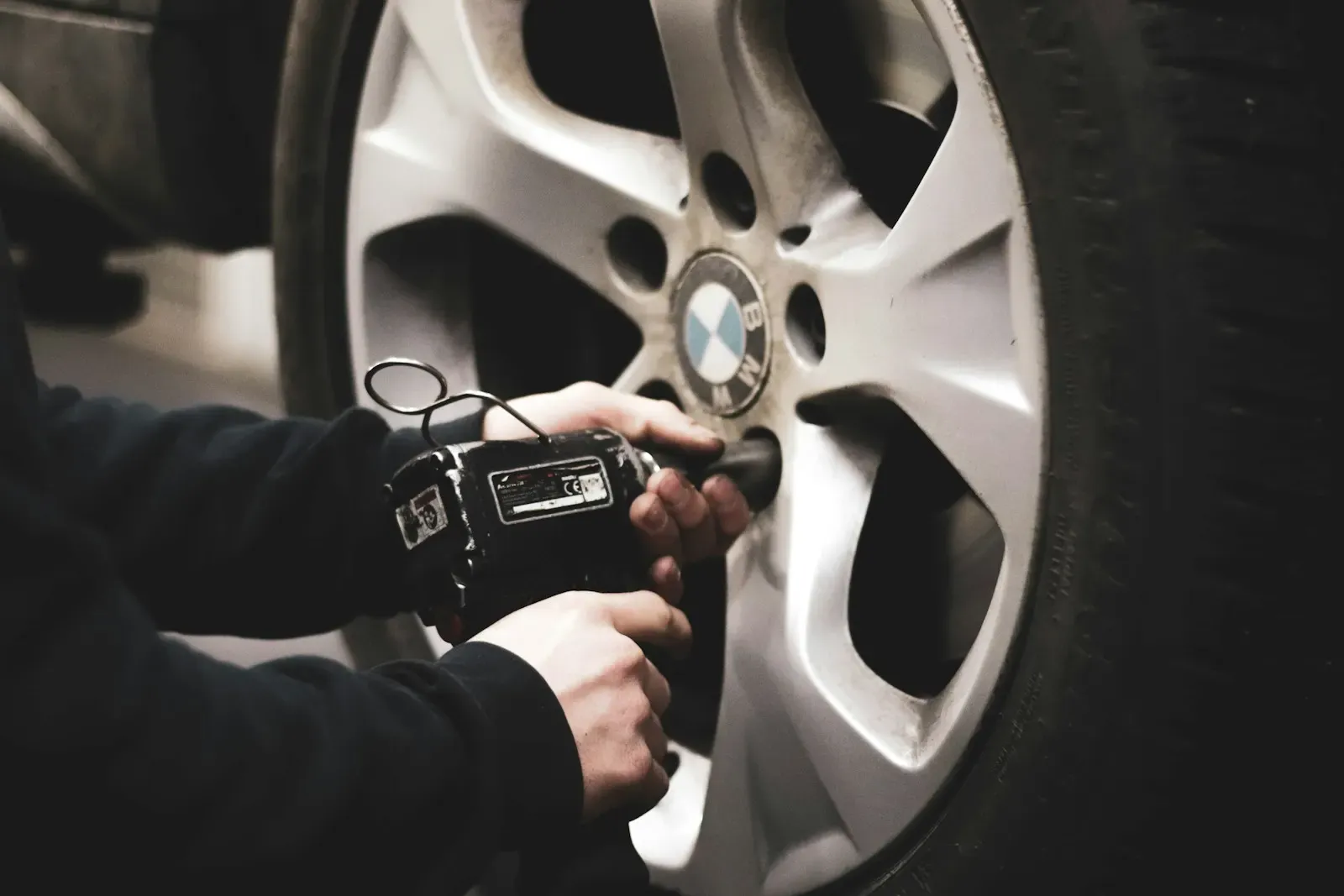
The wheels have to come off
This is the part people are most often surprised by, and the part a rushed inspection skips. The standard states plainly that internal brake components must be inspected at every inspection, and that removal of wheels and brake parts is required to make that possible.
It also requires numbers, not impressions: rotor thickness and the friction material thickness of both the inner and outer pad on disc brakes; shoe lining thickness and drum diameter on drum brakes; tire tread depth at its lowest point. All of it goes on your inspection report. If someone quotes you a safety they can do in fifteen minutes without pulling a wheel, they are not doing the inspection the province describes.
The Numbers That Decide Pass or Fail
Most of the standard is not a judgement call — it is a measurement against a published limit. These are the ones that catch out the most vehicles in Ottawa.
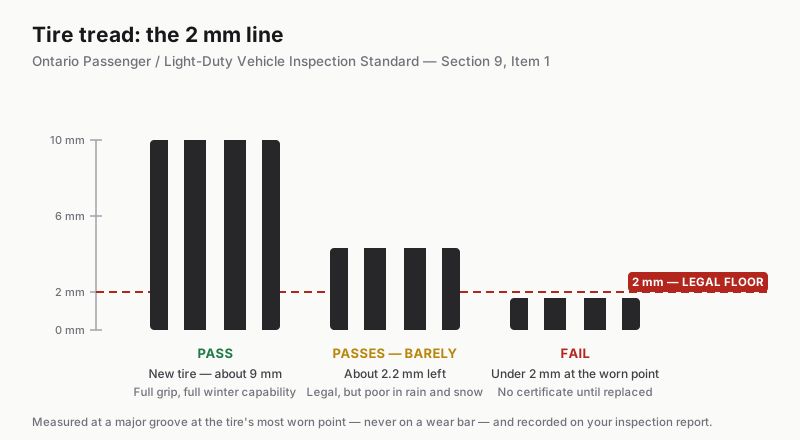
Tires: 2 mm, measured at the worst point
A tire fails when tread depth is less than 2 mm at its shallowest point in a major groove. Not the average across the tire — the worst point. The standard also fails retreaded tires anywhere on a passenger vehicle, sidewall bulges over 10 mm, plug repairs in the sidewall, mismatched tire sizes left to right on the same axle, and mixing radial with non-radial tires anywhere on the vehicle.
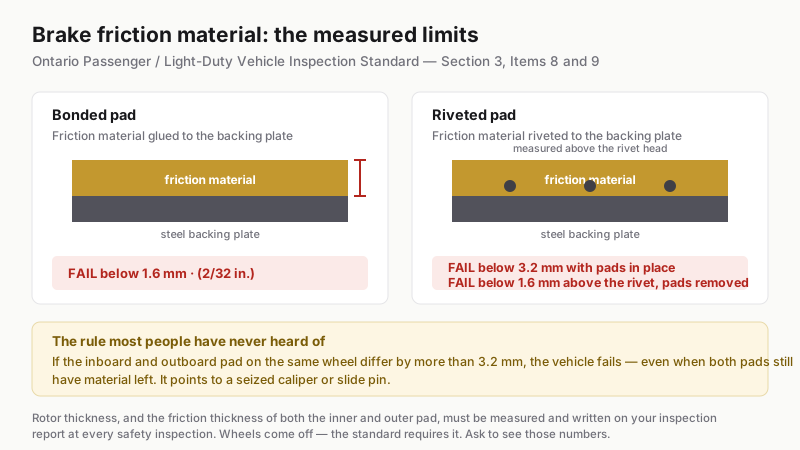
Brakes: 1.6 mm, 3.2 mm, and the side-to-side rule
Bonded friction material fails below 1.6 mm. Riveted material fails below 3.2 mm with the pads in place, or below 1.6 mm above the rivet head with them removed. And the rule almost nobody knows: if the inner and outer pad on the same wheel differ by more than 3.2 mm, the vehicle fails even when both still have material — because that gap means a caliper or slide pin is seizing.
Windshield: it depends where the damage is
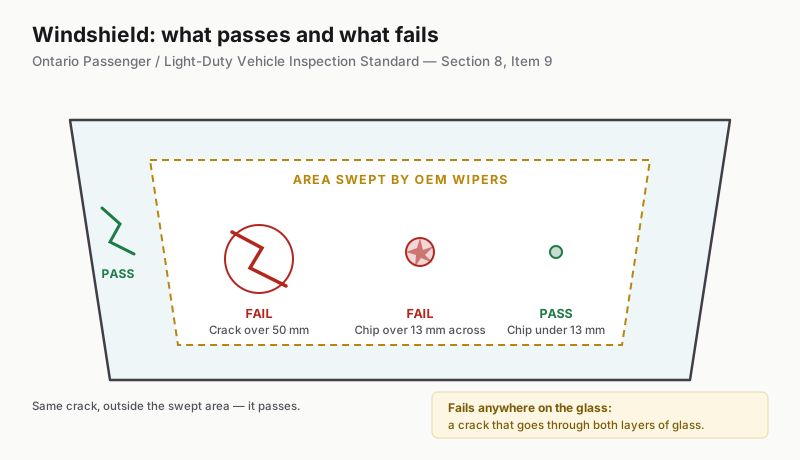
Inside the area swept by the factory wipers, a crack longer than 50 mm fails, and a stone chip larger than 13 mm across fails. Outside that swept area, the identical damage passes. One thing fails anywhere on the glass: a crack that goes through both layers. This is why a chip on the passenger side may be fine while the same chip in front of the driver is not.
Rust: structural versus cosmetic
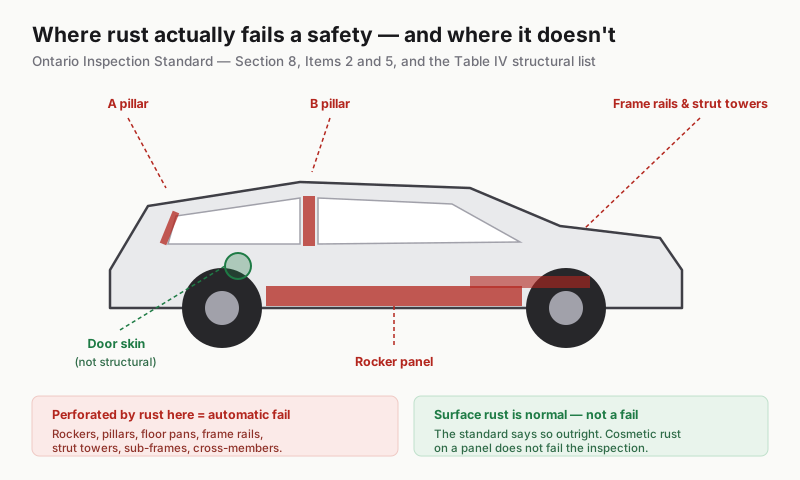
This is the big one in Ottawa, and the most misunderstood. The standard says outright that some rust and corrosion on the outer surface of exposed metal is normal, and cosmetic rust on a panel does not fail. What fails is perforation or corrosion-weakening of structural assemblies: rocker panels, A, B and C pillars, floor pans, frame rails, sub-frames, strut towers and cross-members. Floor holes may be repaired, but only within strict limits on size and location — and never with pop rivets.
Leaks are graded, and brakes are the strictest
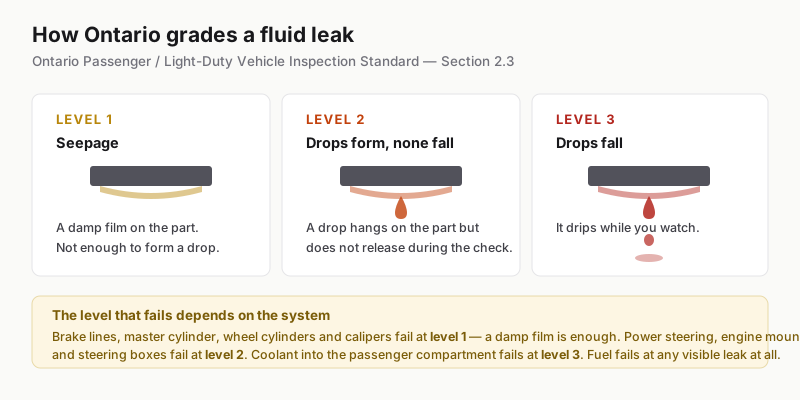
Ontario grades every fluid leak into three levels. Level 1 is a damp film with no drops. Level 2 forms a drop that does not fall. Level 3 drips while you watch. Which level fails depends on the system: brake components fail at level 1 — a damp film on a brake line is enough to fail the vehicle. Power steering and engine mounts fail at level 2. Any visible fuel leak at all is a fail.
Yes, there is a road test — and it has rules
Section 11 of the standard is an on-road evaluation, because some faults simply cannot be found with the vehicle sitting still. The province sets minimum elements it must include:
The road test is looking for things like brakes that pull to one side, a steering wheel that doesn't return to centre after a turn, suspension that keeps bouncing over bumps, a tire that contacts the body under compression, or a CV joint that clicks through a turn. A vehicle needs valid plates for a road test on a public road, which is one reason an unplated vehicle arriving on a trip permit or a tow truck is worth mentioning when you book.
What a Safety Certificate Does — and Doesn't — Tell You
What it confirms
- The vehicle met Ontario's minimum safety standards on the inspection date
- It can be plated and registered — transfers, out-of-province, rebuilt, unfit-to-fit
- Brakes, steering, tires, lamps and structure passed a licensed inspection with recorded measurements
What it doesn't
- It is not a warranty or a guarantee of future reliability
- It doesn't assess engine health, transmission wear or accident history
- The standard says so directly: a pass reflects the vehicle's condition at the time of inspection, with no prediction about the future
Buying used and want the full picture? Pair your safety with our 120-point pre-purchase inspection — it includes a free CARFAX history report and covers what the safety standard leaves out.
Moving to Ottawa? Out-of-Province Vehicle Inspections
Bringing a vehicle from Quebec, Alberta, B.C. or anywhere else? Before Ontario will register and plate it, it needs a Safety Standards Certificate from a licensed Ontario inspection centre. We handle out-of-province safeties for new Ottawa residents every week — including vehicles coming across the river from Gatineau.
- Full inspection at our licensed Ottawa Vehicle Inspection Centre
- A clear repair quote if anything needs attention before it can pass
- Certificate the same visit when your vehicle passes
- Then register at ServiceOntario with your certificate, Ontario insurance and ID
Failed a Safety? We Fix That Too
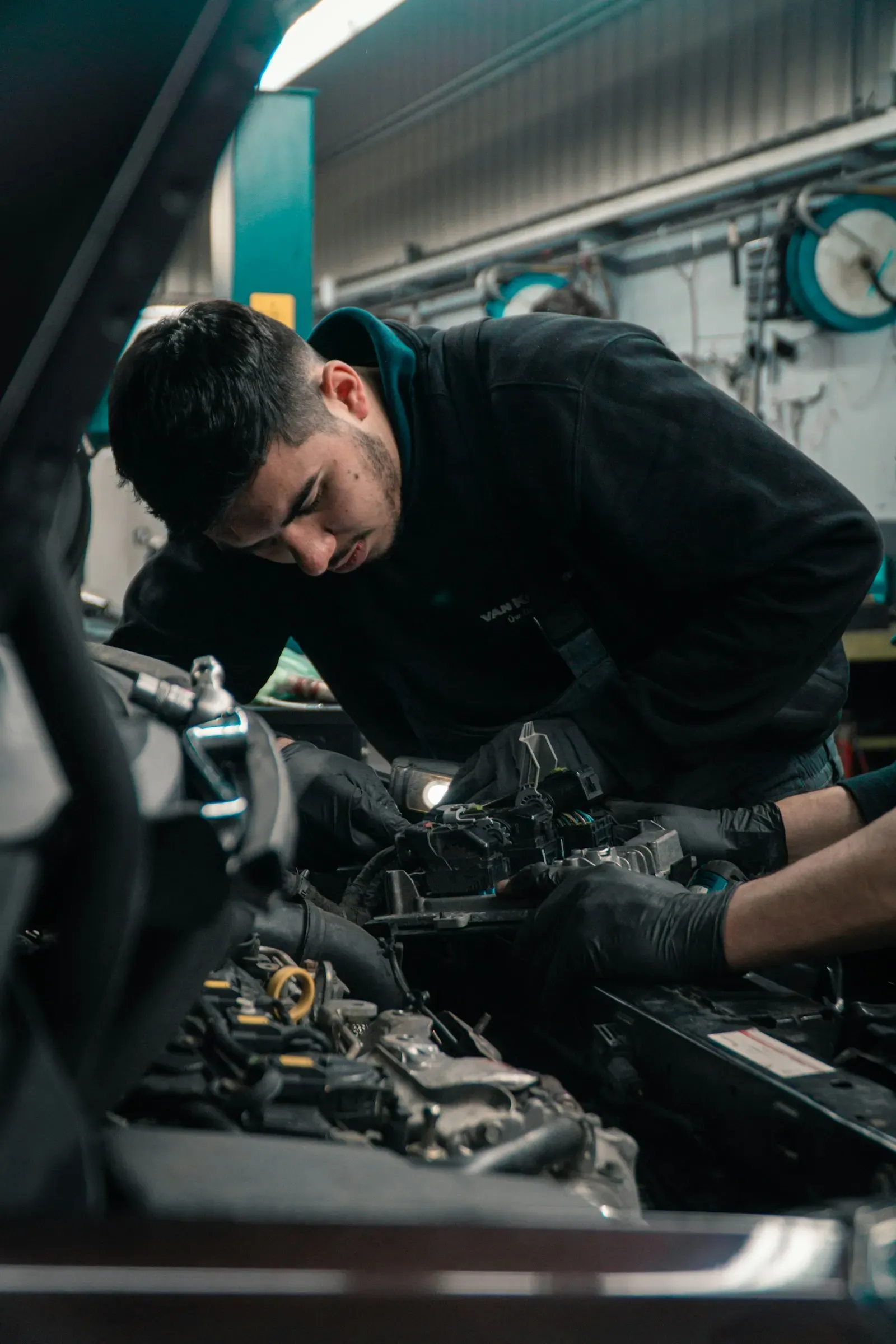
Franco Garage is a full-service repair shop, so a failed inspection never means a second trip somewhere else and a second inspection fee. You get an itemized list of what failed and a quote, and you decide.
There is no obligation to repair with us — the report is yours either way. If you do, we re-inspect the failed items and issue your certificate once the vehicle passes.
Brake Service & Repair
Worn pads, seized calipers and rusted rotors are the most common reason vehicles fail an Ontario safety. We repair and re-inspect in-house.
Learn MoreExhaust System Repairs
A cracked or leaking exhaust fails outright, and so does a muffler that has been bypassed or patched outside industry standard.
Learn MoreSuspension & Steering
Worn ball joints, tie rod ends, blown struts and bushings that let a wheel shift out of position all fail the standard.
Learn MoreBattery & Electrical
A burnt-out bulb is a cheap fix that still fails an inspection. So does chafed wiring with an exposed conductor.
Learn MoreCheck Engine Light Diagnostics
Airbag, ABS and stability control warning lamps are recorded and can fail a vehicle. We diagnose the cause, not just the code.
Learn More120-Point Pre-Purchase Inspection
Buying used? Pair the safety certificate with our 120-point inspection and free CARFAX report before you commit.
Learn MoreWhat Ottawa Drivers Say About Franco Garage
"I dropped my car off at Franco Garage around 11:15am (no appointment, they took me right away) and by 12:30pm they had already ordered my car battery AND installed it! The cost was amazing. They only charged me for the battery itself (under $200) and $15 for labour. Everywhere else I called prior to Franco Garage was quoting between $250-$432 for the battery alone and a high labour cost, not to mention long wait times. I will definitely bring my car back to Franco Garage!! What an incredible experience. The service was extremely fast and the guys working were honest, reliable and really personable!"
Natasha Ferrill
3 months ago
"Noticed I had a deflating tire and a 6AM trip to Montreal the next day. The guys were already fully booked for the day, but still squeezed me in for a quick fix. I didnt even have to wait anywere, they were done in under 15 minites. Both mechanics were very polite and even offered to walk i to the ahop and showed me exactly what was causing the leak in the tire. They knew I was in a rush, but still charged me a fair price. I couldn't be happier, they actually made my day :)"
Yehor Sanko
3 months ago
"Fair and competitive rates. Friendly service and no BS! Thanks from the Dad trying to manage a brake job on his son’s car from Toronto!"
jdyyz
6 months ago
Safety Standards Certificate FAQ
Straight answers to the questions Ottawa drivers actually ask about Ontario safety inspections.
A Safety Standards Certificate (SSC) is an official document confirming that your vehicle met Ontario's minimum safety standards on the day it was inspected. It can only be issued by a Vehicle Inspection Centre licensed by the Ontario Ministry of Transportation. You need one to transfer a used vehicle to a new owner, to register a vehicle brought in from another province or country, to register a rebuilt vehicle, or to change a vehicle's status from unfit to fit. Franco Garage is a licensed Vehicle Inspection Centre in Ottawa at 70 Beech St, and we perform these inspections under Ontario's DriveON program.
A Safety Standards Certificate inspection at Franco Garage starts at $174.95. Ontario does not set a fixed provincial price — each licensed inspection centre sets its own — and the final figure depends on your vehicle: larger trucks, dual-rear-wheel vehicles and anything needing extra teardown to reach the brakes take longer to inspect properly. We confirm the price for your vehicle when you book. Our price covers the complete inspection by a licensed technician against the Ministry of Transportation's Passenger/Light-Duty Vehicle Inspection Standard, including the wheel removal and brake measurements the standard requires, the road test, and the certificate itself when your vehicle passes. If your vehicle needs repairs first, you receive an itemized list of exactly what failed and a clear quote before any work is done.
A Safety Standards Certificate is valid for 36 calendar days from the date of inspection. You have those 36 days to complete the ownership transfer or registration at ServiceOntario. If the certificate expires before you use it, the vehicle has to be inspected again — there is no extension or grace period. If you are buying a used car, check the inspection date on the seller's certificate and count the days: a certificate issued five weeks ago is nearly worthless to you.
DriveON is Ontario's current vehicle inspection program. It replaced the old paper-based Motor Vehicle Inspection Station (MVIS) program, which ended on March 31, 2025. Under DriveON, inspections are recorded digitally: the technician submits measurements and documentation electronically through the provincial system, and your certificate is issued digitally and can be emailed to you rather than existing only as a paper form. The inspection standard itself did not get easier — DriveON changed how results are recorded and verified, which makes certificates harder to forge and easier for a buyer to trust. Shops licensed under the program are now called Vehicle Inspection Centres; many people, including us, still say "Motor Vehicle Inspection Station" out of habit.
The inspection follows the Ministry of Transportation's Passenger/Light-Duty Vehicle Inspection Standard, which is organized into eleven sections: powertrain, suspension, brake systems, steering, instruments and auxiliary equipment, lamps, electrical system, body, tire and wheel, coupling devices, and a road test. Within those sections the technician checks hundreds of individual items against written pass/fail criteria. It is not a walk-around: the standard requires wheels to come off so internal brake components can be inspected, and it requires specific measurements — brake rotor thickness, pad friction material thickness on both the inner and outer pad, tire tread depth — to be taken and recorded on your inspection report.
You do not get a certificate, but you do get something valuable: an itemized list of exactly which components failed and why, with a clear quote to repair them. There is no obligation to have the repairs done with us. If you do, we re-inspect the failed items and issue the certificate once the vehicle passes. Most failures are ordinary wear items — brakes below the measured limit, tires under 2 mm, burnt-out bulbs, exhaust leaks, worn suspension parts — that we repair in-house, often the same day.
You can legally sell a used vehicle in Ontario without a Safety Standards Certificate — but the buyer cannot plate it or drive it until they get one. That is why most private sellers get the certificate first: a "certified" vehicle sells faster and for more, because the buyer knows they can register it immediately. As the seller you also need a Used Vehicle Information Package (UVIP) from ServiceOntario, which is a separate document from the safety certificate and does not replace it. Selling without a certificate is legal; the vehicle just has to be registered as unfit by the buyer.
A safety certificate is not something you carry with you day to day — it is required at specific moments: plating a newly purchased used vehicle, registering an out-of-province vehicle, registering a rebuilt vehicle, or changing a vehicle's status from unfit to fit. If you buy a vehicle without one, you can register the ownership as "unfit", but you cannot legally drive it until it passes an inspection and the status is changed. To get an unplated vehicle to the shop for its inspection, ask ServiceOntario about a temporary trip permit, or have it towed.
Bring the vehicle to a licensed Vehicle Inspection Centre such as Franco Garage for a Safety Standards Certificate inspection. Then take the certificate, your out-of-province registration, proof of Ontario insurance, and identification to a ServiceOntario centre to register and plate it. You generally have a limited window after establishing Ontario residency to register your vehicle, so book the inspection early rather than at the deadline. We handle out-of-province safeties for new Ottawa residents regularly, including vehicles coming across the river from Gatineau.
No. Ontario's Drive Clean emissions testing program for passenger vehicles ended on April 1, 2019, and emissions tests are not required for light-duty and passenger vehicles today. The Safety Standards Certificate inspection is purely about mechanical safety — brakes, steering, suspension, tires, lamps, structure and the other systems in the provincial standard. Heavy-duty diesel commercial vehicles have separate emissions requirements under DriveON, but those do not apply to passenger cars and light trucks.
It depends on the light, and the answer surprises people. For a passenger vehicle with a gross vehicle weight rating of 4,536 kg or less, ABS is not required to be functioning, and an illuminated ABS warning lamp is not by itself cause to fail — though the technician must record it on your inspection report. An airbag (SRS) warning lamp indicating a malfunction does fail. So does a brake system warning lamp indicating a fault, and, on vehicles built on or after September 1, 2011 where stability control is required, an ESC fault. A generic check engine light for an emissions fault is recorded but is not itself a safety-standard failure. Any warning lamp is worth diagnosing regardless — it is telling you something.
No, and the standard is explicit about this: a pass or fail outcome is based on the condition of the vehicle at the time of the inspection, and does not involve any prediction about the vehicle's condition in the future. The certificate is not a warranty, not a guarantee of reliability, and not an assessment of engine health, transmission wear or accident history. A car can pass a safety on Monday and need a transmission on Friday. If you are buying used and want the full picture, pair the safety with our 120-point pre-purchase inspection, which includes a free CARFAX history report and covers everything the safety standard deliberately leaves out.
The inspection takes about 1 hour. Bring the vehicle and your ownership (vehicle permit) — that is all. If the vehicle is not plated, because you just bought it or brought it in from another province, it needs to arrive by tow or on a temporary trip permit from ServiceOntario. If it passes, your certificate is issued the same visit. We offer same-day and next-day appointments at our Ottawa shop whenever the schedule allows, and you are welcome to wait or drop the vehicle off. Book online in under a minute or call (613) 789-2128.
Go Deeper on Ontario Safety Inspections
We wrote the guides we wish existed when customers ask us these questions in the shop.
Ontario Safety Inspection: The Complete Q&A
Every question, answered from the provincial standard
Read itWill My Car Pass? A Pre-Inspection Checklist
Check these yourself before you book
Read itWhy Ottawa Cars Fail on Rust
Structural vs. cosmetic corrosion
Read itBrake Measurements That Decide Pass or Fail
1.6 mm, 3.2 mm and the numbers behind them
Read itBuying a Used Car Privately in Ontario
Safety certificate, UVIP and ServiceOntario
Read itOut-of-Province Vehicle Registration
New to Ottawa? Start here
Read itBook Your Safety Standards Certificate in Ottawa
Licensed DriveON Vehicle Inspection Centre · from $174.95 · about 1 hour · Certificate valid 36 calendar days · Same-day appointments usually available
Mon - Thu: 9:00 AM - 4:30 PM · Fri: 9:00 AM - 3:00 PM 70 Beech St, Ottawa, ON